
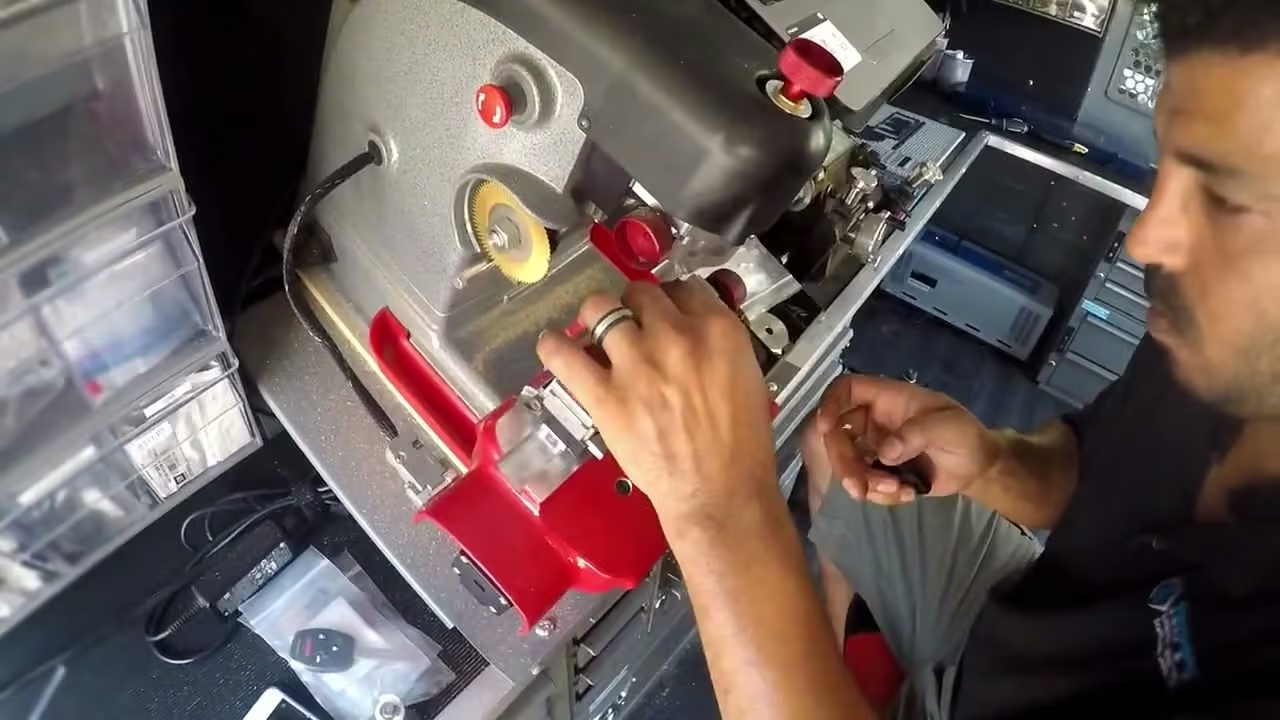
Often, yes. A dealer, or a locksmith with access to the manufacturer’s key information, can usually look up your car’s key code from its VIN, cut a new key to that code, and then program it to the car if it has a chip. Three things decide whether that works for your car:
- The vehicle. Key systems change between makes, models and model years, and some newer systems can only be programmed by the dealer.
- The key type. A plain metal key only needs cutting. A transponder key, a remote-head key or a smart fob also has to be programmed to the car before the engine will start.
- Proof of ownership. Expect to show the registration or title and photo ID before a key is made from the VIN.
Locksmiths get this information through programs such as the National Automotive Service Task Force’s Vehicle Security Professional registry, which gives registered professionals access to key codes and programming information.

What is a key made from the VIN?
For many vehicles, the manufacturer keeps the key code, the code a key machine uses to cut the pattern of the blade, on record against the VIN. A key made from the VIN is cut to that code, so it matches the car’s locks and ignition even when there is no working key left to copy. Because it is cut to the original code rather than traced from an old key, it does not copy the wear on a worn key.
The VIN tells a locksmith which vehicle to look up, not who owns it, so ownership is checked separately. For a car with a transponder key, a remote-head key or a smart fob, cutting is only half the job: the new key also has to be programmed to the car’s immobilizer, or it will open the doors but not start the engine.
What is a VIN?
A vehicle identification number (VIN) is a 17-character code. Federal rules (49 CFR 565.15) set what its characters identify: the manufacturer, the vehicle’s attributes, a check digit, the model year, the assembly plant and the production sequence number. It does not record the owner; the title and registration do that. The VIN is also used to identify a vehicle after a theft or in an insurance claim.
Can I get a key made from the VIN number?
 Usually, but the vehicle decides how. Car keys come in two broad kinds. A non-transponder key is purely mechanical: once it is cut correctly, it opens the doors and turns the ignition. A transponder key has a chip that the car’s immobilizer checks before the engine starts, so a new one has to be cut and then programmed to the car with a programming tool. A key-cutting machine cannot do that programming step on its own.
Remote-head keys and proximity fobs also need their lock and unlock buttons paired. Because some newer key systems can only be programmed by the dealer, tell your locksmith the year, make and model first and ask them to confirm they can make your key.
How do I find out what my VIN is?
On cars and light trucks, the VIN is on a plate inside the car that can be read through the windshield from outside, standing next to the driver’s side windshield pillar (49 CFR 565.13). It also appears on the certification label by the driver’s door (49 CFR 567.4) and on your registration and title. Check that you have all 17 characters.

Where can I get a key made from the VIN?
A dealer for your make, or a locksmith equipped for your vehicle, can usually make one. Have these ready: the year, make and model, the VIN, whether any working key is left, and proof that the car is yours.
Diamondback Lock & Key‘s technicians come to the vehicle, at home, at work or at the roadside, and cut and program the key there. We confirm your vehicle’s key system and the price before we book the job, and the technician checks your registration and ID before making the key. Please share your VIN and ownership documents with us directly, not in public posts or reviews. See replacement car keys for the keys we make, or our automotive locksmith services.